What Made Zinedine Zidane So Elegant? A Tactical Breakdown of Football’s Most Graceful Genius
Football has produced faster players, stronger players, and more statistically dominant players than Zinedine Zidane.
But it has never produced another player who made the game look this calm.
Zidane’s career record shows dominance at both club and international level.
When Zidane touched the ball, time bent around him. Pressing systems dissolved. Defenders hesitated. Stadiums fell quiet for half a second — the universal signal that something beautiful was about to happen.
This wasn’t nostalgia. It wasn’t luck. And it wasn’t just natural talent.
Zidane’s elegance had structure. It was built from mechanics, intelligence, rhythm, and control. Once you understand how those elements worked together, you begin to see why he still feels untouchable in modern football.
He didn’t decorate the game.
He reorganized it.
How Zidane Prepared Before Receiving the Ball
Zidane’s elegance began before possession.
Watch him closely in full match footage, not highlight reels. He is constantly scanning — small head movements every few seconds, mapping defenders, teammates, passing lanes, and escape routes. By the time the ball reached him, the decision was already forming.
Calm wasn’t personality alone. It was preparation.
Most players receive the ball and then solve the problem. Zidane solved the problem before the ball arrived. His body orientation was rarely square. He positioned himself half-turned, already angled toward space. That posture alone removed half the defender’s advantage.
This is why he looked unhurried. He wasn’t reacting. He was executing a plan that already existed in his head.
Elite football is played in fractions of seconds. Zidane bought himself extra time through anticipation. That is the first layer of elegance: intelligence that prevents panic.
The First Touch as a Tactical Weapon
Zidane’s first touch didn’t just control the ball — it rewrote the situation.
Pressing systems rely on chaos. Defenders want heavy touches, awkward bounces, rushed decisions. Zidane denied them that environment. His touch absorbed the ball’s speed and redirected it into safer space in one motion.
He did three things simultaneously:
- Killed the pace of the pass
- Shifted the ball away from pressure
- Positioned his body for the next action
Pressure arrived expecting vulnerability and found stability instead.
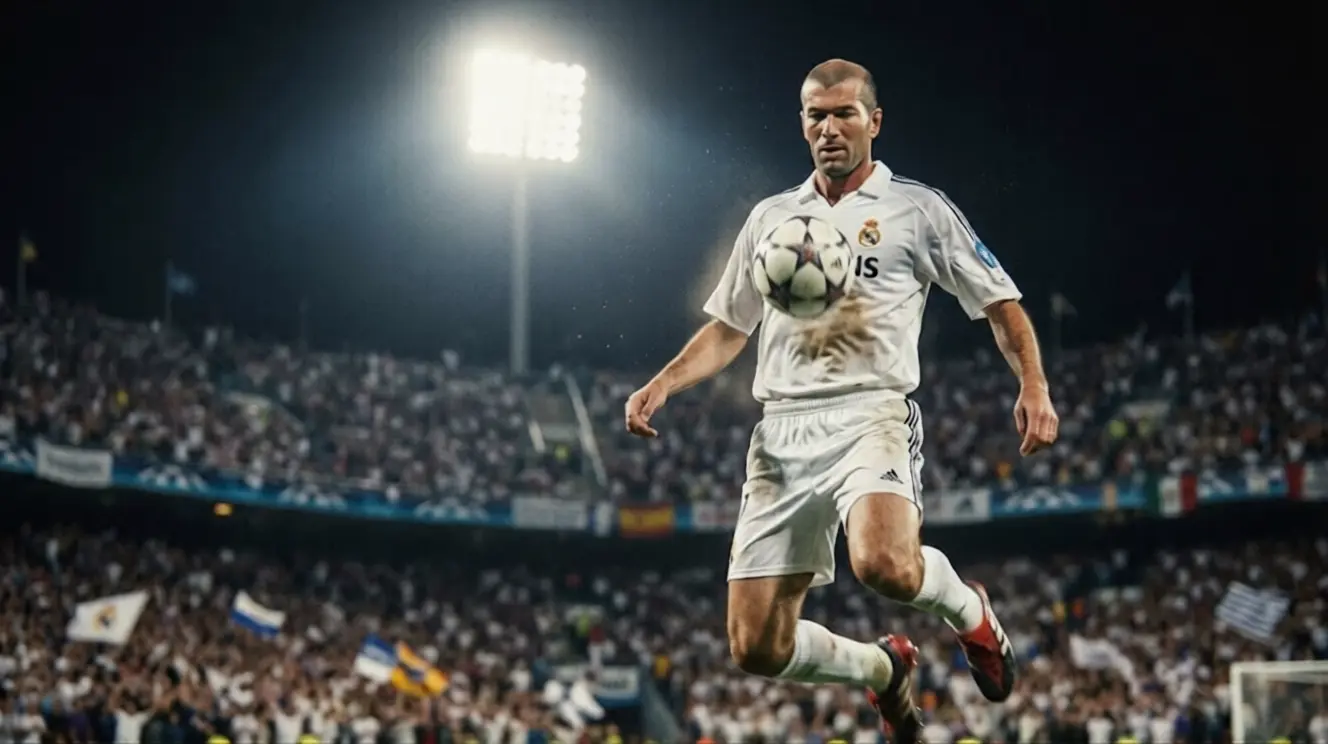
The famous 2002 Champions League final volley remains one of football’s most iconic moments, but the elegance begins earlier. Watch his balance as the ball drops. There is no flinch, no scramble. He reads the trajectory, adjusts his stance, and prepares the strike with surgical calm.
The goal is iconic. The composure is the real masterpiece.
His first touch wasn’t cosmetic skill. It was defensive armor disguised as beauty.
Why Zidane Controlled Tempo Better Than Anyone
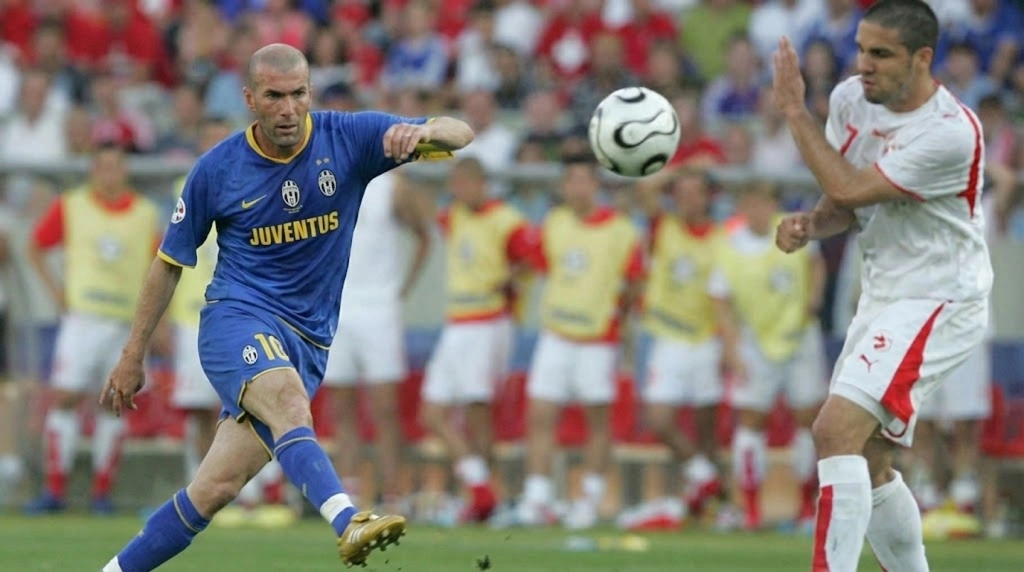
Modern football worships speed. Zidane mastered deceleration.
Most players respond to pressure by accelerating. Zidane slowed the game down. That pause forced defenders to commit first. Once they shifted their weight, they were already late.
This wasn’t laziness. It was psychological control.
His 2006 World Cup performance vs Brazil is still studied as a midfield masterclass, Zidane repeatedly received between the lines and held the ball just long enough to destabilize Brazil’s structure. Cafu stepped inward. Midfield spacing collapsed. France found channels. The match tilted toward Zidane’s rhythm.
He wasn’t outrunning opponents.
He was manipulating their timing.
Stillness became a weapon. By owning tempo, Zidane owned the match. Elegance wasn’t passive — it was dominance expressed quietly.
The Marseille Roulette: Technique That Solved Problems
The roulette became Zidane’s signature move, but it was never empty flair. It was engineering.
Midfield is football’s most crowded battlefield. Survival requires escape mechanisms. Zidane’s spin functioned as a rotating shield: his body protected the ball while his exit path opened simultaneously.
Timing made it devastating.
He waited until the defender leaned forward, then rotated across their blind side and emerged balanced, already moving into the next phase of play. Crucially, the move never paused the attack. It accelerated it.
Street tricks entertain. Zidane’s roulette advanced possession.
That distinction defines elite elegance: beauty that increases efficiency.
How Zidane’s Body Mechanics Made Him Untouchable
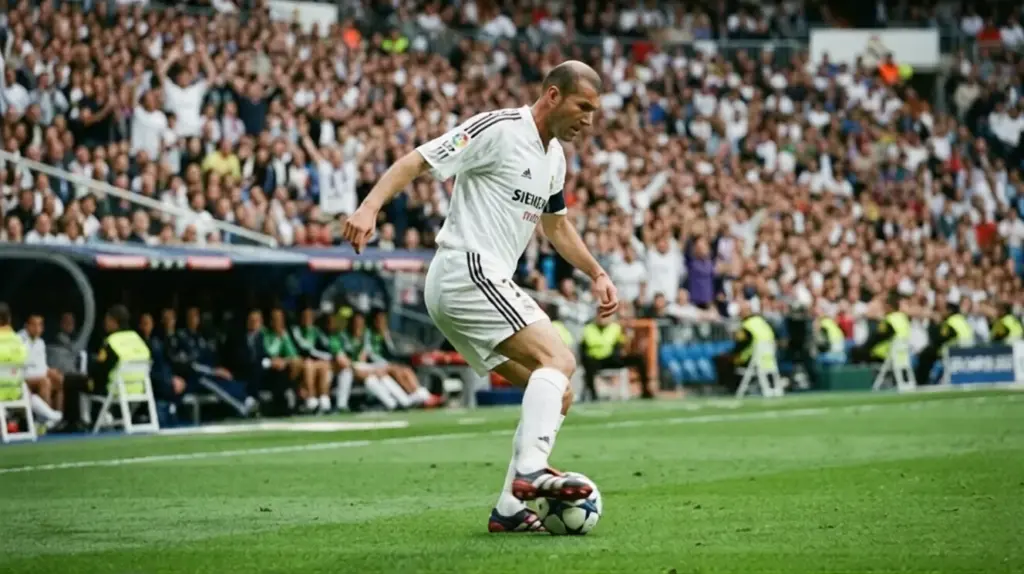
At 6’1″, Zidane shouldn’t have been this fluid in tight spaces. Taller players usually struggle with rapid balance shifts. Zidane moved like a smaller playmaker inside a larger frame.
His core stability was extraordinary. He rotated from the hips while keeping his upper body upright, allowing him to pivot without losing balance. Defenders leaned into challenges. Zidane remained vertical.
That biomechanical control gave him:
- Exceptional ball shielding
- Resistance to shoulder contact
- Smooth rotational turns
- Recovery balance after tackles
He looked untouchable because he rarely fell out of alignment. His center of gravity stayed organized even under pressure.
Elegance wasn’t softness. It was structural efficiency.
Intelligence: Seeing the Game Before It Happens
Zidane’s calm expression hid an aggressively active mind.
He played forward in time. While others reacted to the present, Zidane prepared for the next phase before it existed. His scanning frequency and positional awareness reduced uncertainty.
During Euro 2000, he repeatedly manipulated defensive lines with disguised passes. He shaped opponents’ movement before delivering the decisive ball. He wasn’t just finding space — he was manufacturing it.
True elegance isn’t improvisation alone. It’s foresight made visible.
Zidane turned anticipation into art.
When Pressure Made Him Even Clearer
Many elegant players fade under intensity. Zidane sharpened.
His defining performances came on football’s largest stages:
- Two goals in the 1998 World Cup final
- Complete midfield authority at Euro 2000
- The 2002 Champions League final strike
- The 2006 World Cup masterclass, especially against Brazil
Pressure strips away decoration. Only fundamentals survive. Zidane’s elegance endured because it was built on fundamentals: balance, touch, intelligence, rhythm.
Under maximum stress, he simplified without losing beauty.
That is competitive artistry.
Zidane Versus His Era
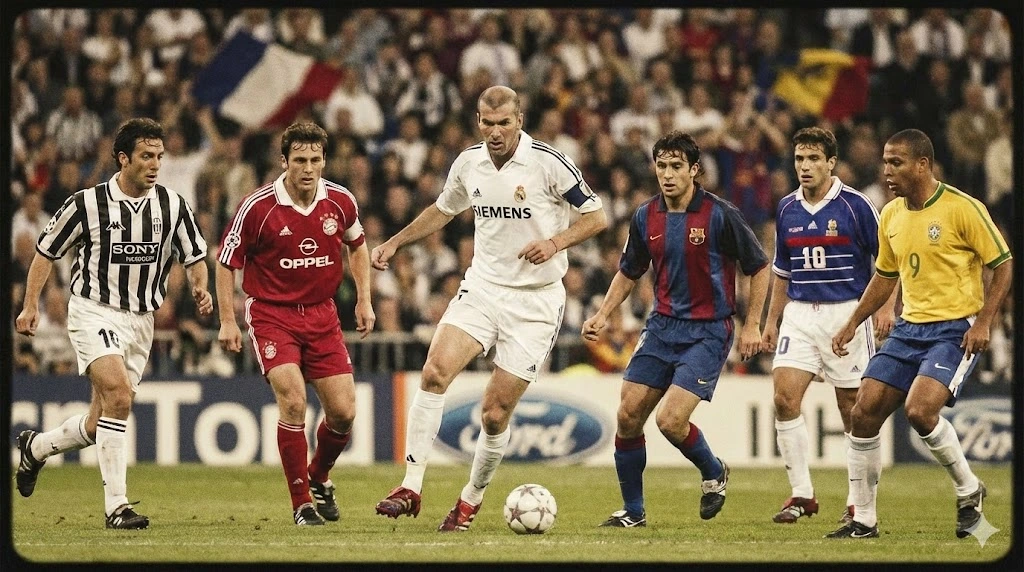
Rivaldo brought explosive unpredictability. Figo offered precision and pace. Pirlo orchestrated geometry from deep. Iniesta glided through acceleration and angles.
Zidane fused physical presence, street creativity, and elite tactical command into one identity. He could dominate physically, orchestrate strategically, and improvise artistically — often in the same sequence.
He wasn’t a specialist.
He was a complete stylist.
Others mirrored parts of his game. No one replicated the whole.
Historians often point to Zidane’s football legacy as one of the most complete in modern sport.
Could a Player Like Zidane Exist in Modern Football?
Today’s game is faster, more compressed, and system-driven. Midfielders are asked to release the ball quicker and cover more ground. Pressing structures leave little breathing space.
Yet Zidane’s principles would still thrive.
Balance, anticipation, and composure are timeless advantages. In fact, his ability to slow chaos might be even more valuable in modern football. The rarest skill today isn’t speed.
It’s calm inside speed.
Zidane specialized in that calm.
That’s why his footage still looks contemporary. His style wasn’t tied to an era — it was tied to principles that outlive tactics.
FAQs
Zidane was considered elegant because of his first touch, balance, tempo control, and ability to remain calm under pressure. He combined efficiency with visual grace, making difficult actions look effortless.
His directional first touch. It created time and space, allowing every other part of his game to function.
He controlled rhythm instead of reacting to it. By removing panic, he forced the game to match his pace.
Many analysts argue yes because he paired aesthetic beauty with decisive dominance in football’s biggest matches.
It’s possible, but such a player would need tactical freedom to control tempo rather than chase it.
Conclusion: Elegance as Power
Zinedine Zidane’s elegance was not fragility. It was authority expressed quietly.
His touch removed panic. His balance stabilized chaos. His intelligence predicted futures. His rhythm bent matches toward inevitability.
Watching Zidane didn’t feel like watching effort.
It felt like watching control disguised as grace.
And in a sport built on uncertainty, control is the rarest beauty of all.