
The Story of Johan Cruyff’s “Total Football” Philosophy: The Strategy That Changed Soccer Forever
When you watch Manchester City rotate positions or Arsenal slice through defenses with one-touch passing, you’re not seeing a modern invention. You’re watching a tactical idea born more than 50 years ago.
You’re watching Johan Cruyff’s Total Football in motion.
In the early 1970s, Cruyff and the Dutch national team introduced a style so fluid that defenders became attackers, attackers became playmakers, and space mattered more than positions. It wasn’t just entertaining — it rewired how elite football is played.
Cruyff wasn’t remembered simply for scoring goals. He changed the architecture of the game itself. His philosophy turned Ajax and the Netherlands into popular global icons, inspired Barcelona’s golden eras, and laid the tactical blueprint followed by Pep Guardiola and today’s possession-dominant teams.
This is the story of the system that transformed football from rigid structure into organized freedom — and why its influence still shapes every top club today.
Total Football Explained: Key Takeaways from Johan Cruyff’s Tactical Revolution
At its simplest, Total Football is built on a bold idea: no player is locked into one job. A defender can attack, a striker can drop into midfield, and the shape of the team keeps shifting without ever falling apart. Positions exist, but they’re flexible. Movement is everything.
The system was created by coach Rinus Michels, but Johan Cruyff was the brain that made it breathe on the field. Watching him play was like watching someone solve a puzzle in real time. He drifted across the pitch, pulled defenders with him, opened passing lanes, and quietly controlled the rhythm of the game. Teammates adjusted around him, and suddenly the whole team moved as one unit.
The real weapon behind Total Football wasn’t flashy dribbling or endless passing — it was space. The Dutch side stretched opponents until gaps appeared, then attacked those gaps instantly. If a winger cut inside, someone else filled the wing. If a striker stepped back, a midfielder burst forward. Opponents couldn’t settle because the picture kept changing.
You still see this idea every weekend in modern football. When Manchester City rotate positions and create overloads, or when Barcelona pin teams back with positional play, they’re using principles Cruyff helped popularize. Tiki-taka didn’t appear out of nowhere — it grew from the same philosophy. Total Football wasn’t just a style from the 1970s. It became the blueprint for how elite teams think about space and movement today.
What Is Total Football? A Simple Breakdown of Cruyff’s Playing Philosophy
To understand Johan Cruyff’s Total Football, you have to imagine what it felt like to defend against it. Opponents weren’t facing a formation — they were chasing shadows.
In the 1960s, most teams played in strict lanes. Defenders defended. Strikers attacked. Roles rarely overlapped. Matches followed a predictable pattern, and coaches valued discipline over freedom.
Total Football tore that script apart.
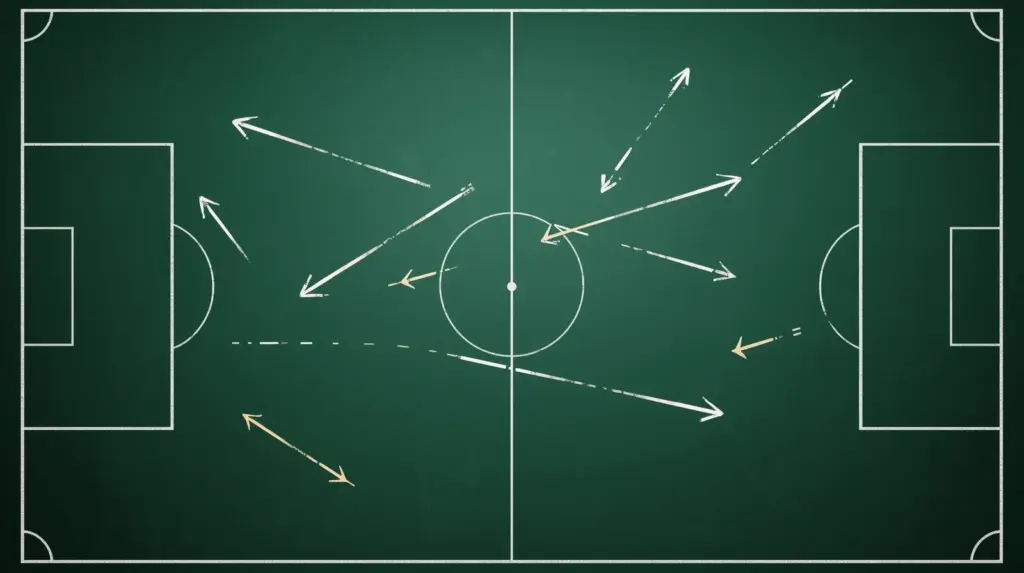
The system was built on fluid positioning. When a right-back surged forward, someone instinctively filled the space he left behind. When a striker dropped into midfield, another attacker slid into the vacant channel. The formation never disappeared — it simply reshaped itself every few seconds. To the opposition, it looked like controlled chaos.
A famous example came from Ajax and the Dutch national team in the early 1970s. Defenders would step into midfield, midfielders would appear on the wings, and markers didn’t know whether to hold their position or follow their man. That hesitation was enough. One second of confusion created the opening.
Cruyff believed football was played with the brain first and the feet second. His players needed exceptional awareness, stamina, and trust in one another. They weren’t memorizing positions — they were reading space. As Cruyff himself put it: “Football is a game you play with your brains.”
The secret to understanding Total Football is simple: don’t watch the ball. Watch how the space changes. That’s where the real game is happening.
The Origins of Total Football: Ajax, Rinus Michels, and Dutch Tactical Innovation
While Cruyff is the face of the philosophy, the mastermind behind the curtain was his coach, Rinus Michels.
At Ajax Amsterdam in the late 60s and early 70s, Michels and Cruyff began experimenting. They realized that by expanding the pitch when they had the ball (players spreading out) and shrinking the pitch when they lost it (aggressive pressing), they could dominate possession.
This Ajax Total Football style led the club to three consecutive European Cups (1971, 1972, 1973). It was dominance on a scale the world hadn’t seen.
For a deeper tactical breakdown of how Cruyff viewed space, check out this analysis by The Coaches’ Voice on Cruyff’s Tactics.
1974 World Cup: How Johan Cruyff Introduced Total Football to the World
The summer of 1974 in West Germany was when Total Football truly introduced itself to the world.
The Netherlands national team, led by Captain Cruyff, mesmerized fans. They didn’t just beat teams like Argentina and Brazil; they outclassed them. It was during this tournament that Cruyff unveiled the famous “Cruyff Turn,” a move that symbolized the unpredictability of the Dutch style.
Although they heartbreakingly lost the final to West Germany, the impression was made. The world saw that a team could move like a single organism.
Johan Cruyff at Barcelona: Building a Club Around Total Football Principles
After his playing days, Cruyff took this Dutch philosophy to Spain. This is where the story shifts from history to modern legacy.
Cruyff managed Barcelona and implemented the same principles:
- Possession is key: You can’t concede a goal if you have the ball.
- Triangles: Players should form triangles to always offer the ball-carrier two passing options.
- The Academy: He overhauled La Masia, Barcelona’s youth academy, to teach these tactics to kids.
What I’ve found works best in analyzing modern football is tracing it back to this moment. Without Cruyff’s work at Barcelona, there is no Lionel Messi, no Xavi, and no Andres Iniesta.
How Total Football Influenced Modern Soccer Tactics and Positional Play
You might be wondering, “Is this still relevant?” The answer is a resounding yes.
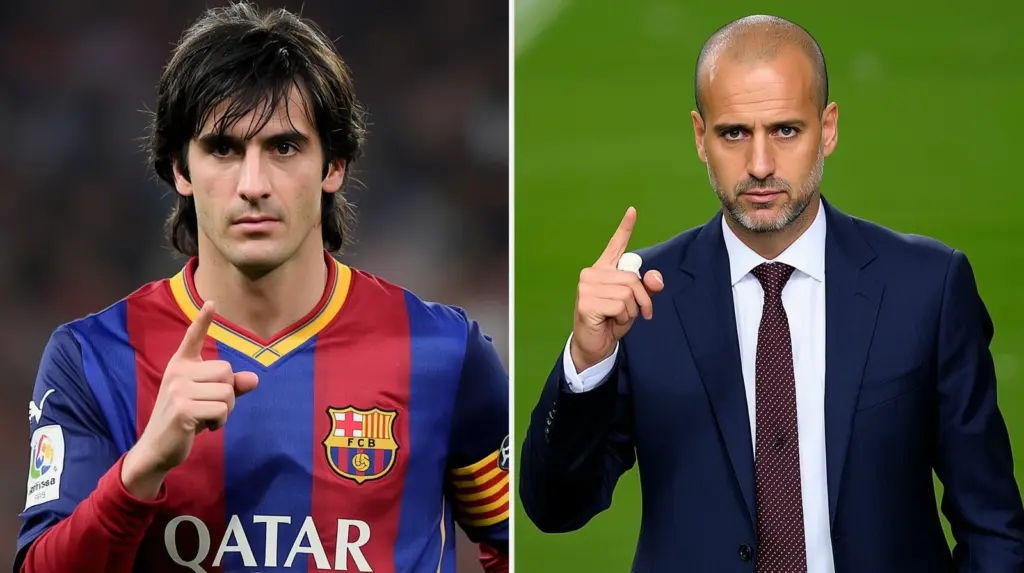
Pep Guardiola, widely considered the best manager of the modern era, was a player under Cruyff. Guardiola took the story of Johan Cruyff’s “Total Football” philosophy and evolved it into Tiki-Taka.
- High Pressing: Winning the ball back within seconds of losing it (a Cruyff staple).
- Sweeper Keepers: Goalkeepers who can pass like midfielders (think Ederson or Neuer).
- Positional Play: Overloading specific zones of the pitch to break defenses.
Total Football FAQ: Common Questions About Cruyff’s System Answered
Not entirely. The concept was developed by coach Rinus Michels. However, Cruyff was the on-field general who perfected it and the manager who evangelized it to the world.
It is called “Total” because it demands total versatility from the players. No player is fixed to a single role; they must be totally capable of attacking and defending.
Pure Total Football is rare because it requires exhausting physical fitness. However, teams like Manchester City, Arsenal, and Ajax still use heavy elements of the philosophy, specifically regarding possession and high pressing.
It is a dribbling move where Cruyff feinted to pass the ball, then dragged it behind his standing leg to turn 180 degrees and accelerate away from the defender.
The Lasting Legacy of Total Football in Today’s Game
The story of Johan Cruyff’s “Total Football” philosophy is more than just a chapter in a history book. It is the operating system of modern soccer. Cruyff taught us that the game isn’t just about running; it’s about thinking. It’s about managing space and time.
He once said, “Winning is an important thing, but to have your own style, to have people copy you, to admire you, that is the greatest gift.” By that measure, Cruyff is the undisputed winner.
What do you think? Was the 1974 Netherlands team the best team to never win a World Cup? Leave a comment below with your thoughts!